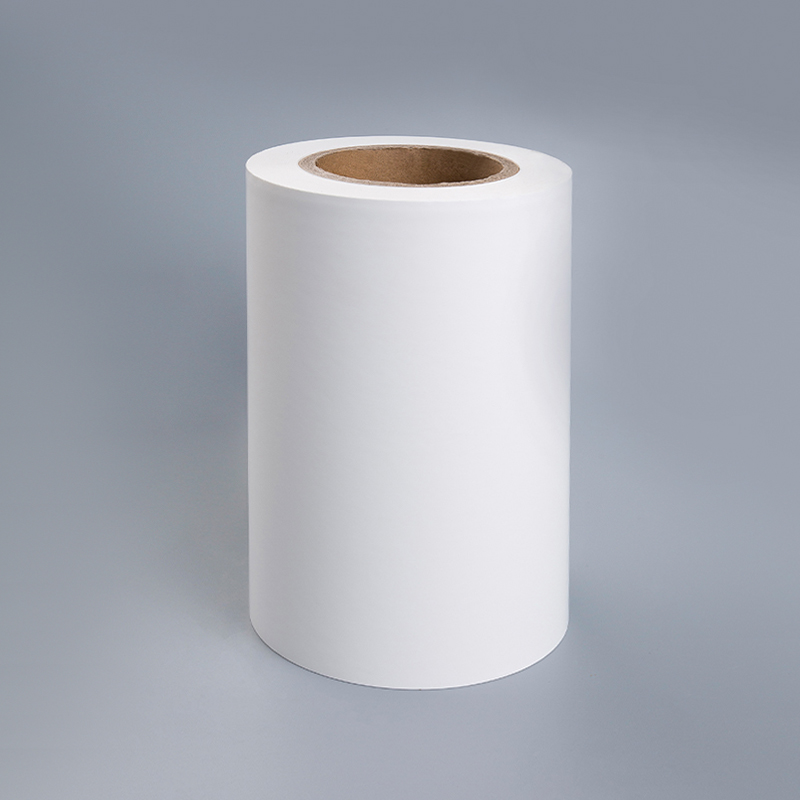

Plain holographic laser film in rolls 인쇄된 그래픽이나 텍스트 없이 빛을 조작하는 미세한 표면 구조에 의존하여 독특한 변화하는 무지개 효과를 생성합니다. 따라서 맞춤형 홀로그램 이미지의 복잡성 없이 밝고 눈길을 끄는 마감이 필요한 포장, 선물 포장, 장식용 라미네이션 및 공예 응용 분야에 널리 사용됩니다. 이 필름이 물리적 수준에서 어떻게 작동하는지 이해하면 구매자와 전환업체가 올바른 제품을 선택하고 제작 중에 올바르게 적용하는 데 도움이 됩니다.
The Science Behind the Holographic Effect
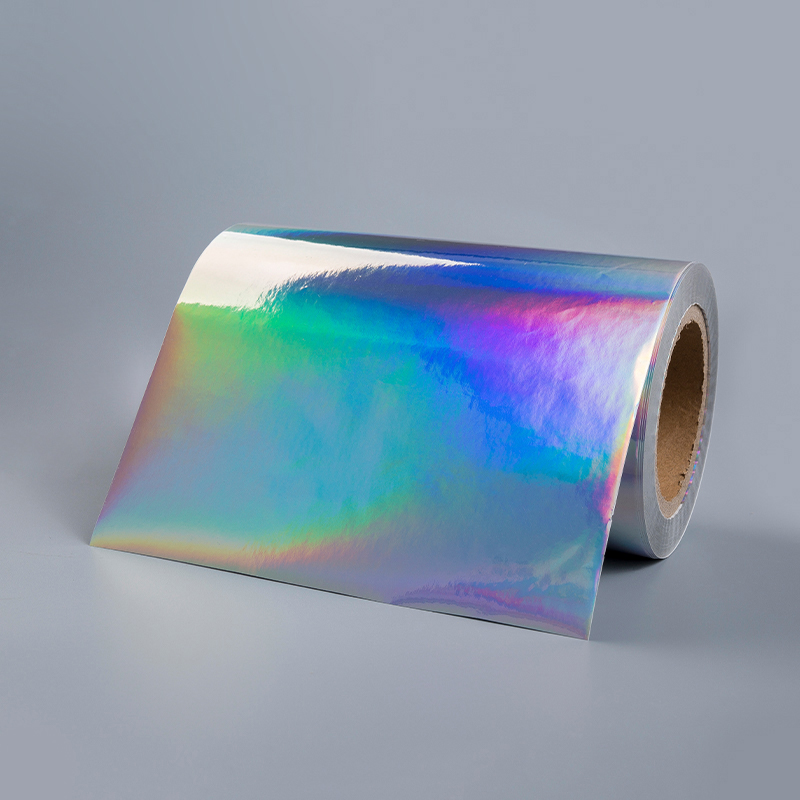
The rainbow, shifting appearance of plain holographic laser film comes from a phenomenon called diffraction, not from pigments or dyes. The film's surface contains millions of microscopic grooves or patterns embossed at a scale smaller than the wavelength of visible light. 빛이 이러한 홈에 닿으면 구성 요소 파장으로 분할되어 약간 다른 각도로 반사되어 보는 각도에 따라 변하는 것처럼 보이는 색상의 이동 스펙트럼을 생성합니다.
Diffraction Versus Reflection
일반 금속 포일과 같은 표준 반사 소재는 보는 사람의 위치에 상관없이 일정한 각도로 빛을 반사시켜 균일한 빛을 발산합니다. 홀로그램 필름은 엠보싱 처리된 마이크로 패턴으로 인해 빛이 회절되기 때문에 다르게 작동합니다. 즉, 빛의 다양한 파장이 다양한 양만큼 구부러집니다. This is why holographic film appears to shift color as the viewing angle or light source position changes, while plain foil does not.
Why "Plain" Refers to the Pattern, Not the Effect
The term "plain" in plain holographic laser film refers to the absence of a custom image, logo, or design embossed into the surface. 대신 전체 롤은 선형 또는 도트 매트릭스 구조와 같은 균일한 마이크로 패턴을 전달하여 재료의 전체 폭과 길이에 걸쳐 일관된 무지개 반짝임을 생성합니다. 이는 특별히 설계된 마스터 패턴을 사용하여 특정 모양, 텍스트 또는 보안 기능을 표시하는 맞춤형 홀로그램 필름과 구별됩니다.
How the Film Is Manufactured
일반 홀로그램 레이저 필름을 생산하려면 일반 플라스틱 기판을 광회절 물질로 변환하는 몇 가지 정밀한 단계가 필요합니다. Each stage plays a role in determining the final brightness, durability, and consistency of the holographic effect.
Embossing the Micro-Pattern
The process begins with a master embossing roller or shim that carries the microscopic diffraction pattern. 일반적으로 BOPP 또는 PET와 같은 플라스틱 필름이 열과 압력을 받아 엠보싱 장치를 통과하면 패턴이 필름 표면에 압착되어 회절 효과를 담당하는 물리적 구조가 생성됩니다.
금속화
엠보싱 후 필름은 일반적으로 진공 금속화 챔버를 통과하며, 여기서 얇은 알루미늄 층이 엠보싱 표면에 증착됩니다. This metallic layer is essential because it reflects light back through the diffraction pattern, intensifying the holographic effect. 금속화가 없으면 엠보싱 패턴만으로도 훨씬 더 희미하고 눈에 띄지 않는 효과가 나타납니다.
라미네이션 또는 코팅
의도한 응용 분야에 따라 금속 필름을 종이나 플라스틱 뒷면에 적층하거나 긁힘 방지 및 내구성을 향상시키기 위해 보호 층으로 코팅할 수 있습니다. This step also determines how the finished roll will be used, whether for direct lamination onto packaging or as a standalone decorative film.
Common 패턴 유형s and Their 시각 효과s
서로 다른 양각 패턴은 모두 "일반" 홀로그램 범주에 속하더라도 눈에 띄게 다른 시각적 효과를 생성합니다. 올바른 패턴을 선택하는 것은 최종 제품에 대해 원하는 시각적 효과에 따라 달라집니다.
| Pattern Type | Visual Effect | 일반적인 사용 |
| 선형 격자 | Subtle, directional rainbow streaks | 선물 포장, 리본 |
| 도트 매트릭스 | Sparkling, glitter-like appearance | Decorative packaging, crafts |
| Crystal or diamond pattern | Bright, multi-directional sparkle | Premium packaging, labels |
| 무지개 그라데이션 | Smooth, continuous color shift | Balloons, decorative film |
홀로그램 효과의 품질에 영향을 미치는 요소
동일한 일반 패턴 유형을 사용하더라도 모든 홀로그램 레이저 필름이 동일하게 작동하는 것은 아닙니다. 여러 가지 제조 및 재료 요소가 최종 효과가 얼마나 밝고, 일관되고, 내구성이 있는지에 영향을 미칩니다.
- 밝기와 색상 분리에 영향을 미치는 엠보싱 마이크로 패턴의 깊이와 정밀도
- 금속층의 두께와 균일성
- Quality and clarity of the base film substrate
- 롤투롤 생산 공정 중 장력 제어의 일관성
- 장기간의 긁힘 방지 및 습기 저항에 영향을 미치는 보호 코팅 품질
이 작동 원리에 의존하는 실제 응용
홀로그램 효과는 전적으로 인쇄된 잉크가 아닌 물리적인 빛의 회절에서 나오므로 일반 홀로그램 레이저 필름은 시간이 지남에 따라 품질이 저하될 수 있는 컬러 안료에 의존하지 않고 내구성이 뛰어나고 퇴색 방지 장식 마감 처리를 제공합니다. This makes it well suited to applications such as gift wrapping paper, retail packaging, greeting cards, balloons, and craft materials, where a consistent, vibrant shine is desired across large production volumes. Converters also value the film for lamination onto paperboard or other substrates, since the diffraction effect remains visible even after the film is bonded to a secondary material.
작동 원리에 따라 올바른 필름 선택
Understanding that the holographic effect depends on embossed micro-patterns and metallization, rather than printed color, helps buyers evaluate film samples more critically. When reviewing rolls from different suppliers, checking pattern sharpness under varied lighting angles, testing metallization consistency across the width of the roll, and confirming the protective coating's durability all provide better insight into long-term performance than relying on a single static sample viewed under one light source. Selecting film based on these physical characteristics, rather than appearance alone, leads to more consistent results once the material moves into full production.